"We need a system" usually gets answered by buying a tool, switching it on, and hoping order follows. It rarely does, because a tool is an empty container and a system is what you design inside it. The gap between the two is where most attempts quietly fail: the software gets paid for, a few people use it their own way, and within months the business is back to chat threads and memory. (If you're still choosing the container, we cover that in your own system versus off-the-shelf tools. This piece is about what goes inside it.)
A system that genuinely runs a business is not complicated, but it is deliberate. It has four building blocks, and they fit together in order. Get them in place and the workspace stops being somewhere people are asked to put things, and starts being where the work actually happens.
The four building blocks of a system that runs
1. The lifecycle: how work flows from start to finish
Every business has a path its work travels, from first contact to delivered result. A system begins by making that path explicit: the stages a piece of work moves through, and what has to be true to move from one to the next. Without this, a tool just holds a pile of tasks with no sense of where anything is. With it, the workspace mirrors how your business actually operates, and status becomes visible at a glance.
2. Work breakdown: turning big things into owned pieces
A project is too big to act on as one lump. The system breaks it into the actual pieces of work it contains, each small enough to have a single clear owner and a clear definition of done. This is what turns "deliver the project" into a set of concrete, assignable steps, so nothing lives only as a vague intention in someone's head.
3. Dependencies and timelines: what waits on what
Real work is not a flat checklist. Some steps cannot start until others finish, and some quietly hold up everything behind them. A system maps these dependencies and lays them on a timeline, so you can see what is blocking what, where the pressure points are, and whether a deadline is realistic before you promise it. This is the difference between a list of tasks and a plan that holds.
4. The dashboard: one place that tells the truth
Finally, all of it rolls up into a single view that answers the everyday questions without anyone having to ask: what is in progress, what is stuck, what is coming, who owns what. This is the single source of truth. When it exists and people trust it, the daily ritual of chasing status disappears, because the status is simply there.
The order matters: design before you build
These blocks go in sequence, and the sequence is the whole game. You map the lifecycle first, because the breakdown hangs off it. You break work down before you can assign dependencies. The dashboard comes last, because it reflects everything beneath it. Skip to the dashboard, as most tool rollouts effectively do, and you get a pretty view of an undesigned mess. Design from the lifecycle up, and the dashboard becomes genuinely trustworthy.
One more thing belongs before all of it: a process worth building around. A system makes whatever it holds faster and more permanent, which means building one around a broken process just entrenches the break. If the underlying way of working is unclear, that gets sorted first. (Our piece on process mapping from the pain is a good place to start.)
Is your "system" actually designed?
It probably isn't yet, if:
- Your tool holds tasks but doesn't reflect how work moves through stages.
- Big projects sit as single items rather than broken-down, owned pieces.
- Nothing shows you what's blocking what.
- There's no one view everyone trusts for status.
- People still ask "where are we on this?" despite the software.
Build the system, not just the subscription
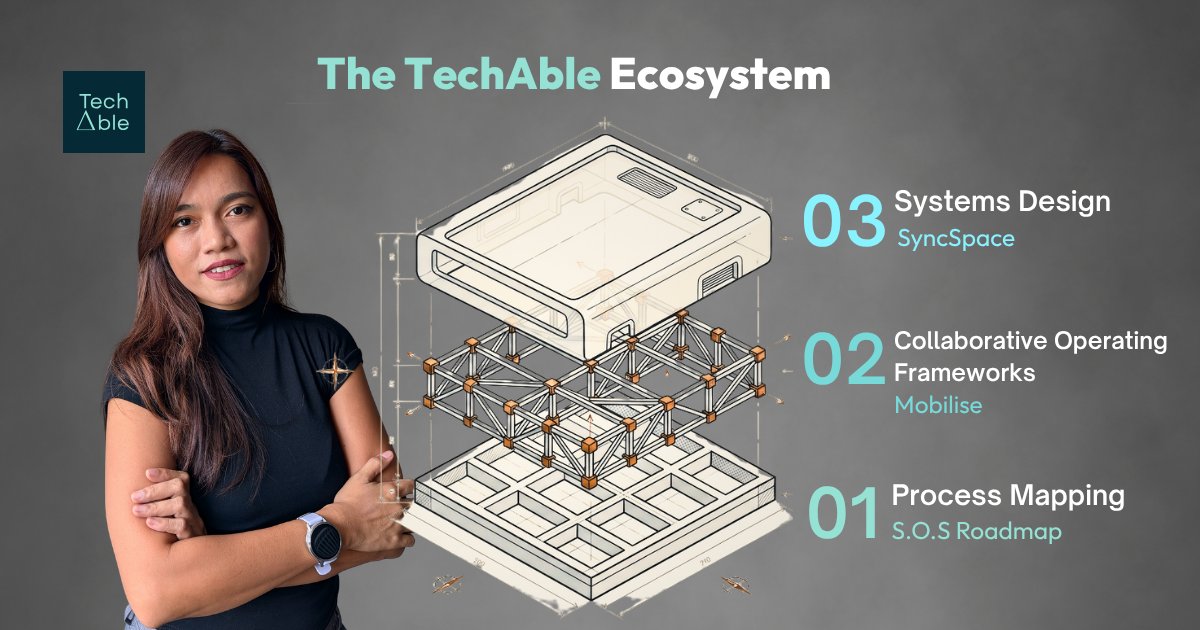
This is exactly what SyncSpace builds. We design the workspace that runs your whole operation, in the right order: project lifecycle design, work breakdown structures, timeline and dependency mapping, and one dashboard that becomes your source of truth. Whatever tool sits underneath, the value is in the design, so you end up with a system the business genuinely runs from, rather than one more place to check. Or explore all three TechAble services.