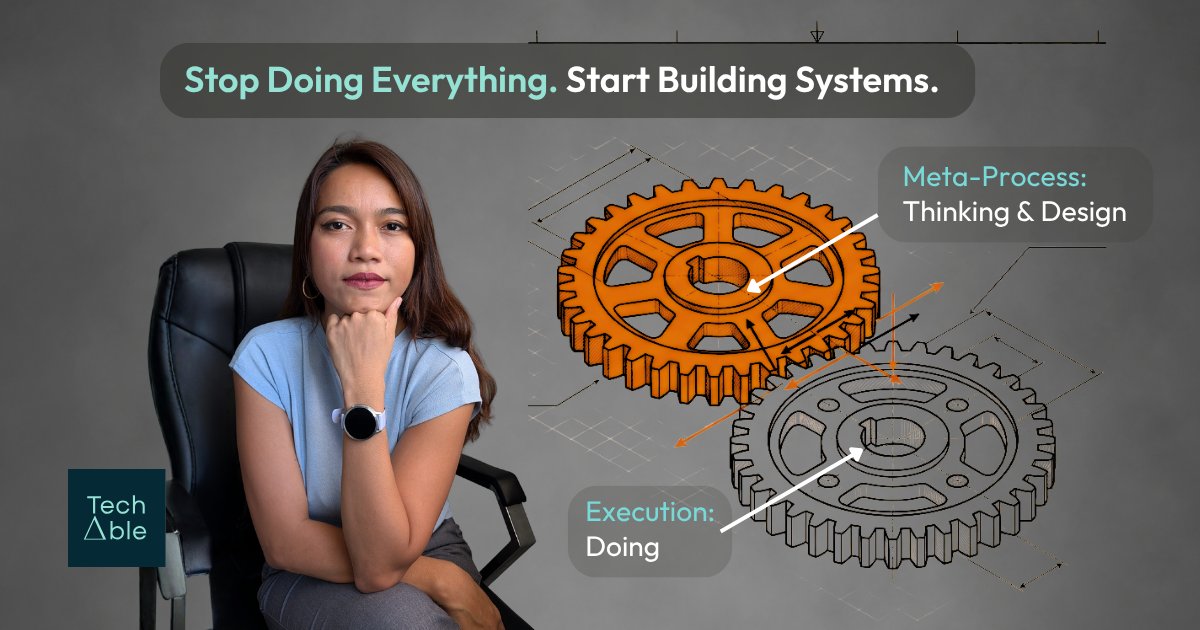
"Operations consultant" is a vague phrase, and that vagueness costs you. It conjures someone who arrives, talks in frameworks, leaves a slide deck, and bills you for the privilege. So you keep winging it: another spreadsheet, another late night, another fix that holds for a fortnight. Meanwhile the real problem keeps charging rent.
This article is the plain-English version of what the work actually involves, what a diagnostic uncovers, and how to tell you have crossed the line from "we'll sort it ourselves" to "this is now costing more than it would cost to fix."
What an operations consultant actually does for a small business
Strip away the jargon and it comes down to three things. First, they make the invisible visible: how work really flows through your business, not how you think it does. Second, they find where it breaks: the handovers that drop, the steps with no owner, the points where everything waits on one person. Third, they hand you a ranked plan, so you are not fixing at random but fixing what costs you most, first.
Notice what is not on that list: running your business for you, or selling you software you do not need. A good diagnostic is a mirror and a map, not a dependency.
What a diagnostic actually uncovers
Almost every operational problem in a small service business traces back to the same three gaps. A diagnostic exists to find which one is binding you right now.
No clear process
The work gets done, but differently each time, depending on who does it and how busy they are. Quality swings. Things get missed. Nobody can say exactly how a job should run because it has never been written down.
Unclear ownership
Tasks exist but owners do not. Work falls into the gaps between people, then surfaces late as a problem. The default owner of anything unclaimed becomes you, which is how more and more of the business ends up running through one person.
No single source of truth
Information lives in inboxes, chat threads, three spreadsheets and someone's memory. The most common sentence in the business is "where does this live?" Every answer costs a search, and some answers are simply lost.
Are you ready for a diagnostic?
You're likely past the DIY line if:
- Growth is adding chaos rather than capacity.
- The same problems keep recurring no matter how many times you "fix" them.
- You're hiring, but onboarding takes months and quality dips while it does.
- You can feel that something is wrong operationally but can't name exactly what.
- You've tried tools and templates and none of them stuck.
Why "we'll fix it ourselves" usually doesn't
Fixing your own operations is hard for the same reason proofreading your own writing is hard: you are too close, and you compensate for the gaps automatically without noticing them. You also have a day job running the business. The fixes get deprioritised the moment a client emergency lands, which is always. A diagnostic works because it is external, dedicated, and ranks the work so the highest-value fix happens first instead of last.
What you walk away with
The S.O.S. Roadmap is the diagnostic done properly. We map your entire lead-to-client lifecycle, surface every gap in process, ownership and handover, and rank them by impact. You leave with sub-process maps, SOP recommendations, Executor Profiles, and a prioritised plan: clarity on exactly what to fix first. Not advice that gathers dust, but a map you can act on, with the most expensive problem named and at the top. Or explore all three TechAble services.